
Rent is usually the largest regular payment a tenant makes and the main income a landlord relies on, so both sides need records they can trust. A rent statement shows what was charged, what was paid and what is still owed. A clear rent statement template prevents disputes over missed or late payments and gives tenants the proof of rent they often need for tax credits, benefit claims and new rental applications. It also gives landlords tidy records for their accounts and tax returns.
This guide explains the different kinds of rent statements and what each should contain. It shows how to keep a rent ledger, how to handle arrears fairly and how to split rent and bills in a shared house. Five free templates are included.
What Is a Rent Statement?
A rent statement is a written record of a tenancy account over a period. It lists the rent and other charges due, the payments received and the resulting balance. Depending on its purpose, it can be:
- A rent ledger: a running record of every charge and payment for one tenancy, usually kept by the landlord or agent.
- An annual rent statement: a summary of rent paid over a year, signed by the landlord as confirmation for the tenant.
- A rent roll statement: a monthly summary across several units or properties, prepared for an owner or investor.
- A rent arrears statement: a breakdown of unpaid rent with a proposed repayment plan.
- A rent and utilities statement: a split of rent and bills between housemates or within a shared property.
A rent statement isn’t the same as a rent receipt. A receipt confirms one payment. A statement covers the whole account and shows the balance. For general account-style records, see our statement of account templates.
What to Include in a Rent Statement
- Landlord or agent name and contact details
- Tenant name(s) and the rental property address
- Tenancy start date and the rent amount and frequency
- Statement period or date
- Opening balance (arrears or credit carried forward)
- Each rent charge and any other agreed charges, such as late fees allowed under the lease, utilities or parking
- Each payment, with the date received and the method
- Running balance and closing balance
- Deposit held and where it’s protected, if relevant
- Signature or confirmation where the statement is used as evidence
Download 5 Free Rent Statement Templates
These templates suit individual landlords, letting agents, property managers and tenants sharing a home. The Excel files keep running balances, collection rates and bill splits up to date automatically, and the Word files are ready to sign and send.
1. Tenant Rent Ledger Statement
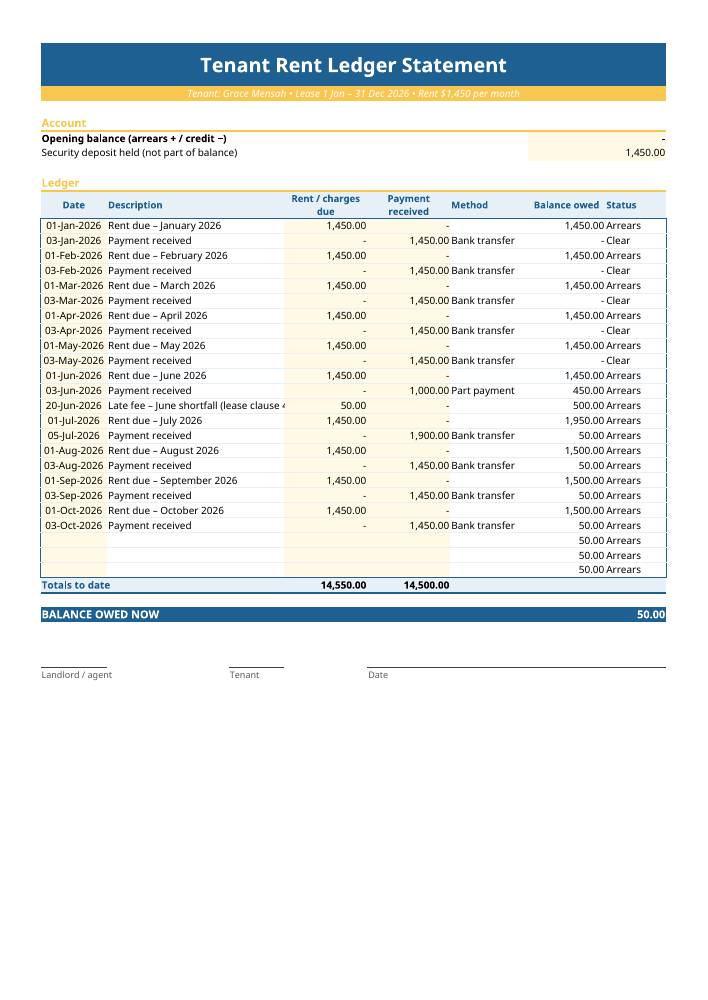
A running rent ledger for one tenancy, showing each rent charge, payment and late fee. It keeps the balance owed up to date and marks every line as clear, in arrears or in credit.
2. Annual Rent Statement (Word)
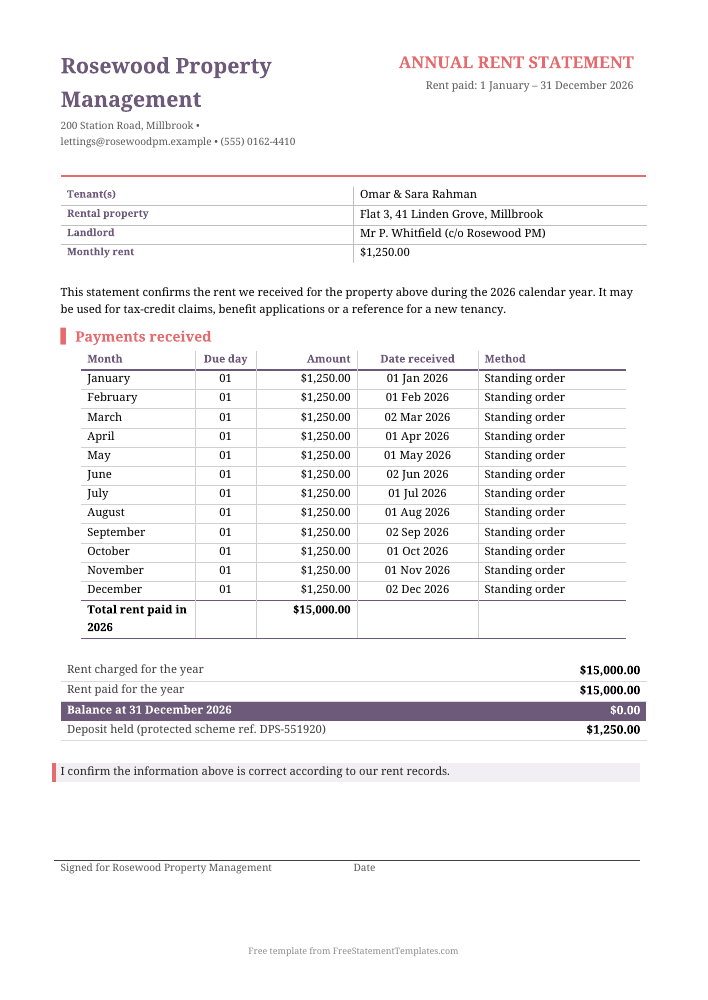
A year-end statement of the rent a tenant has paid, signed by the landlord or agent. Tenants often need one for tax credits, benefit claims and tenancy references.
3. Rent Roll Statement (Multi-Unit)
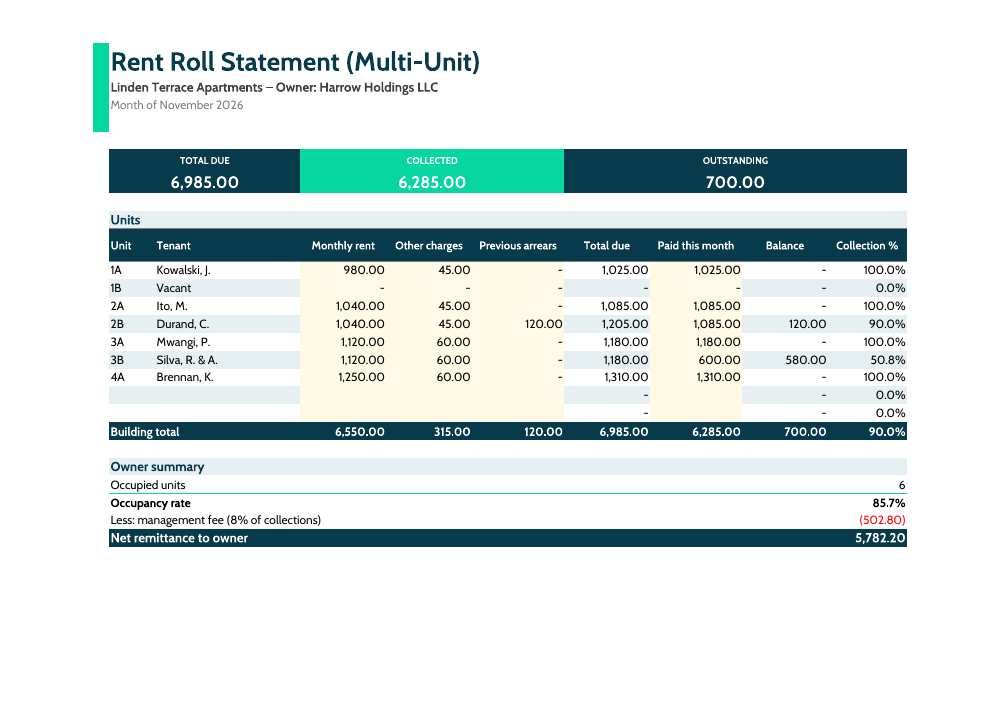
A monthly statement for buildings with several units. It shows what each unit owes and has paid, the collection %, the occupancy rate and the net amount sent to the owner after the management fee.
4. Rent Arrears Statement
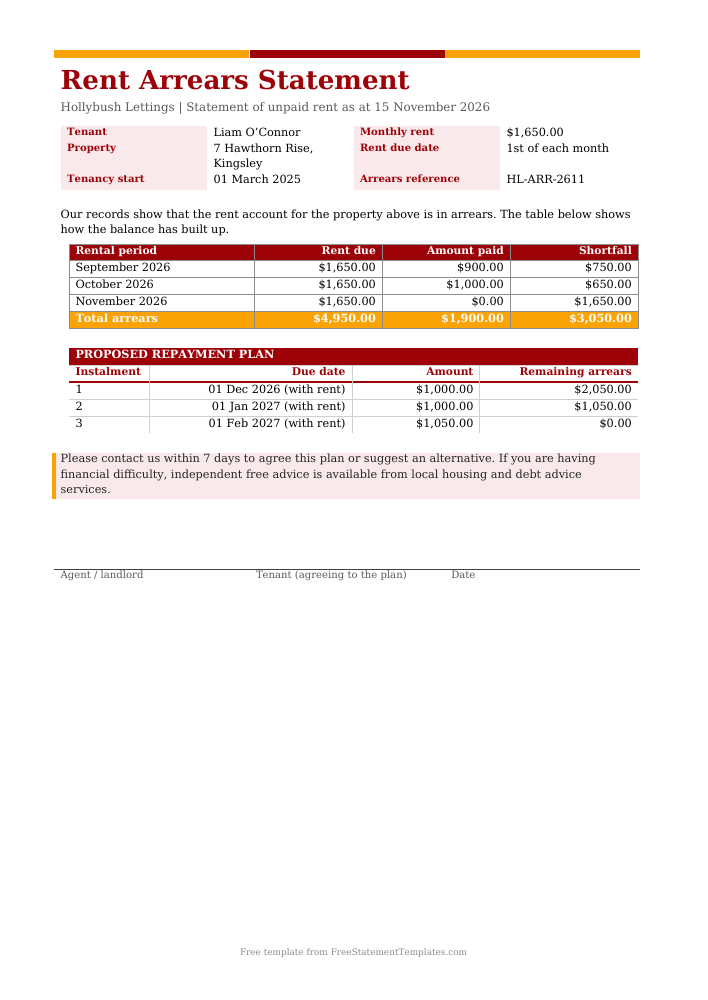
Sets out unpaid rent month by month and proposes a repayment plan for the tenant to sign, written in a calm, factual tone.
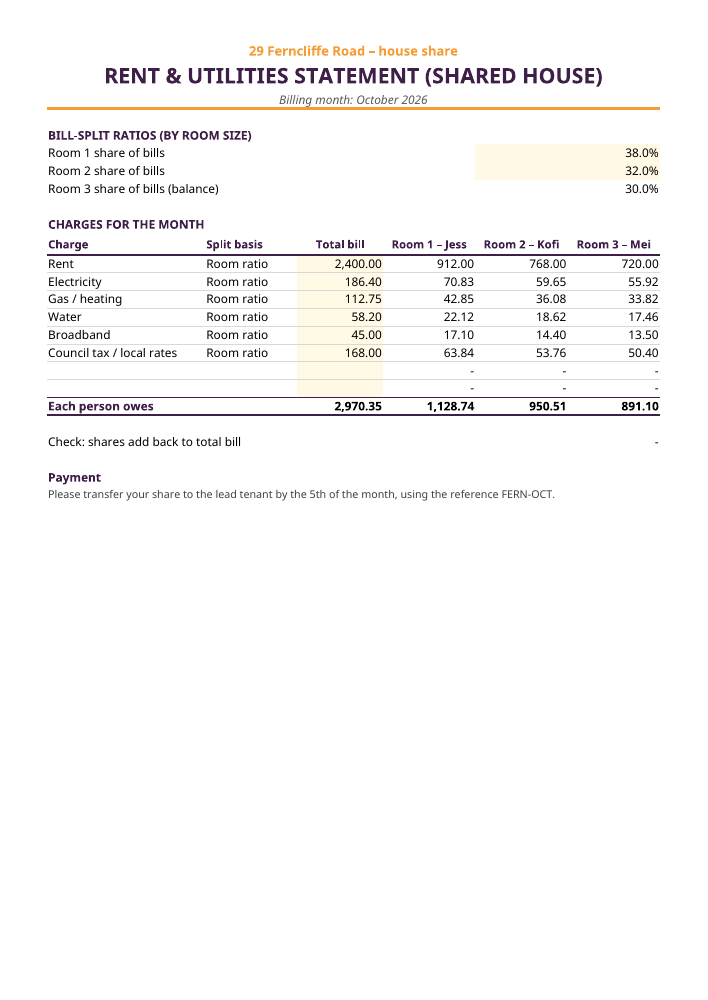
5. Rent & Utilities Statement (Shared House)
Splits rent and each utility bill between housemates by agreed ratios, with a check that the shares add back to the full bill.
How to Keep a Rent Ledger
The tenant rent ledger is the foundation of good rental records. Set it up when the tenancy starts and update it every time rent is due or received.
- Enter the opening balance. For a new tenancy this is zero. The security deposit is shown separately, because it is held for the tenant, not paid as rent.
- Post a charge line on each rent due date, for example “Rent due – March 2026”.
- Post each payment on the date it arrives, with the method (bank transfer, standing order, cash with a receipt).
- Add any other charges only if your lease allows them, such as an agreed late fee, and describe them clearly.
- Check the status. The template shows “Clear”, “Arrears” or “In credit” on every line, based on the running balance.
A ledger kept like this answers almost any question about the tenancy in seconds, including how often rent was late and exactly how much is owed today.
Annual Rent Statements for Tenants
Tenants often need proof of the rent they’ve paid: for tax credits or deductions where these exist, for benefit or housing assistance applications, for mortgage applications that consider rental history, or as a reference for a new landlord. The annual rent statement lists each month’s payment with the date received and method, totals the year and confirms the closing balance and deposit. Landlords or agents should sign it, and tenants should keep a copy with their own bank records.
Rent Roll Statements for Multi-Unit Properties
If you manage a building or a portfolio, owners want a one-page summary each month. The rent roll template lists every unit with its tenant, monthly rent, other charges, previous arrears, total due, amount paid, balance and collection percentage. It counts occupied units and calculates the occupancy rate. The management fee is deducted to give the net remittance to the owner. Carry those figures into your profit and loss statement to track rental income, and into your cash flow statement to plan for repairs and mortgage payments.
Handling Rent Arrears Fairly
Arrears happen, often because of a job loss, illness or a benefit delay. A clear, calm statement is usually the fastest way to get back on track. The arrears template shows each period’s rent due, the amount paid and the shortfall, then proposes a realistic repayment plan with instalments added to future rent. Keep the tone factual, invite the tenant to suggest another plan if needed and point them to free independent advice services.
Always follow local law. Many jurisdictions set rules on late fees, required notices and the steps a landlord must take before starting possession proceedings. An accurate rent statement is usually the key piece of evidence in any formal process, so keep it up to date from the first missed payment. If a dispute does arise, a formal statement of facts can help set out the timeline.
Splitting Rent and Bills in a Shared House
Housemates often share rent and bills unevenly, for example by room size. The rent and utilities template takes the agreed share for each room, applies it to rent and each bill and shows what each person owes. A check line confirms that the shares add back to the full bill, so the lead tenant never ends up covering a shortfall.
A Quick Ledger Example
Grace rents a flat for $1,450 a month, due on the 1st. In June she can only pay $1,000, so the ledger shows a balance of $450 and the status changes to “Arrears”. The lease allows a $50 late fee, so the landlord posts it on 20 June as a separate, clearly labelled line, and the balance becomes $500. In July Grace pays $1,900: the July rent of $1,450 plus $450 of the June shortfall. The ledger now shows $50 owed, the unpaid late fee, and both parties can see exactly why. Without a running ledger, that kind of small leftover balance is easy to lose track of and often causes friction months later when the deposit is returned.
Tips for Landlords and Tenants
- Use bank transfers where possible. They create an automatic record. If cash is unavoidable, always give and keep a signed receipt.
- Record payments on the day they arrive, not when you next get round to it.
- Keep the deposit separate from rent on every statement.
- Send tenants a statement at least once a year, and whenever they ask. It builds trust and catches mistakes early.
- Keep records for several years for tax purposes. Rental income must usually be reported, and expenses are often deductible.
Find more account and payment records in our Bank & Account Statements category.
Frequently Asked Questions
What is a rent statement used for?
A rent statement records the charges and payments on a tenancy and shows the balance. Landlords use it to track income and arrears. Tenants use it as proof of rent paid for tax, benefit, mortgage or rental applications. Both parties use it to settle disagreements about what has been paid.
What is the difference between a rent statement and a rent receipt?
A rent receipt confirms a single payment on a specific date. A rent statement summarises the whole account over a period, including every charge, every payment and the running balance. Many landlords issue receipts for cash payments and statements monthly or yearly.
Can a tenant ask a landlord for a rent statement?
In many places tenants have a right to request information about their rent account, and most landlords and agents will provide a statement on request anyway. If you need one for an application, ask in writing and say what period it should cover.
How do I write a rent arrears statement?
List each rental period with the rent due, the amount paid and the shortfall, then total the arrears. Add a proposed repayment plan with dates and amounts, a deadline to respond and a note about where the tenant can get free advice. Keep the tone factual and check local rules on notices and late fees.
Should the security deposit appear on a rent statement?
It can be noted for information, but keep it separate from the rent balance. The deposit belongs to the tenant until the end of the tenancy, and in many jurisdictions it must be held in a protected scheme. Don’t use it to offset rent arrears during the tenancy unless the law and your agreement allow it.
Do these templates work for commercial leases?
Yes. The ledger and rent roll templates work for commercial units too. Add lines for service charges, rates or common area maintenance as needed, and adjust the descriptions to match your lease terms.
Final Thoughts
Clear rent records make tenancies run more smoothly. Keep a ledger for every tenancy, send annual statements, deal with arrears early and in writing and use a simple split sheet in shared houses. A few minutes each month saves hours of argument later.