
A mission statement is a concise explanation of why an organization exists, who it serves, what value it creates, and the principles that guide its decisions. Unlike a slogan, it should be specific enough to guide priorities and broad enough to remain useful as the organization grows. A practical test is whether a new employee could read the statement and use it to understand which customers, activities, and outcomes matter most.
Strong mission statements usually answer four questions: Who do we serve? What do we provide? What outcome are we trying to create? What values shape how we work? Answering these questions before drafting helps prevent vague phrases that could describe almost any organization.
Our free mission statement templates provide a simple starting point for creating a professional and meaningful mission statement. Instead of trying to develop the structure from a blank page, you can use a template to organize your ideas, identify the organization’s purpose, and create a concise statement that reflects its goals and values.
A mission statement can be useful for startups, established businesses, nonprofit organizations, schools, teams, community groups, professional organizations, and individuals. Depending on your purpose, you can customize a mission statement template to create a business mission statement, nonprofit mission statement, personal mission statement, or organizational mission statement.
What Is a Mission Statement?
A mission statement is a concise description of an organization’s purpose, activities, and intended impact. It explains what the organization does and why that work matters.
For example, a company’s mission statement might describe the products or services it provides, the customers it serves, and the value it aims to create. A nonprofit mission statement might focus on a social cause, the people or communities it serves, and the change it wants to achieve.
A strong mission statement is usually specific enough to communicate a meaningful purpose while remaining concise and easy to remember.
The purpose is not to describe every activity the organization performs. Instead, a good mission statement provides a clear sense of the organization’s fundamental reason for existing.
Free Mission Statement Templates
Using a free mission statement template can make the writing process easier by giving you a framework for organizing your thoughts.
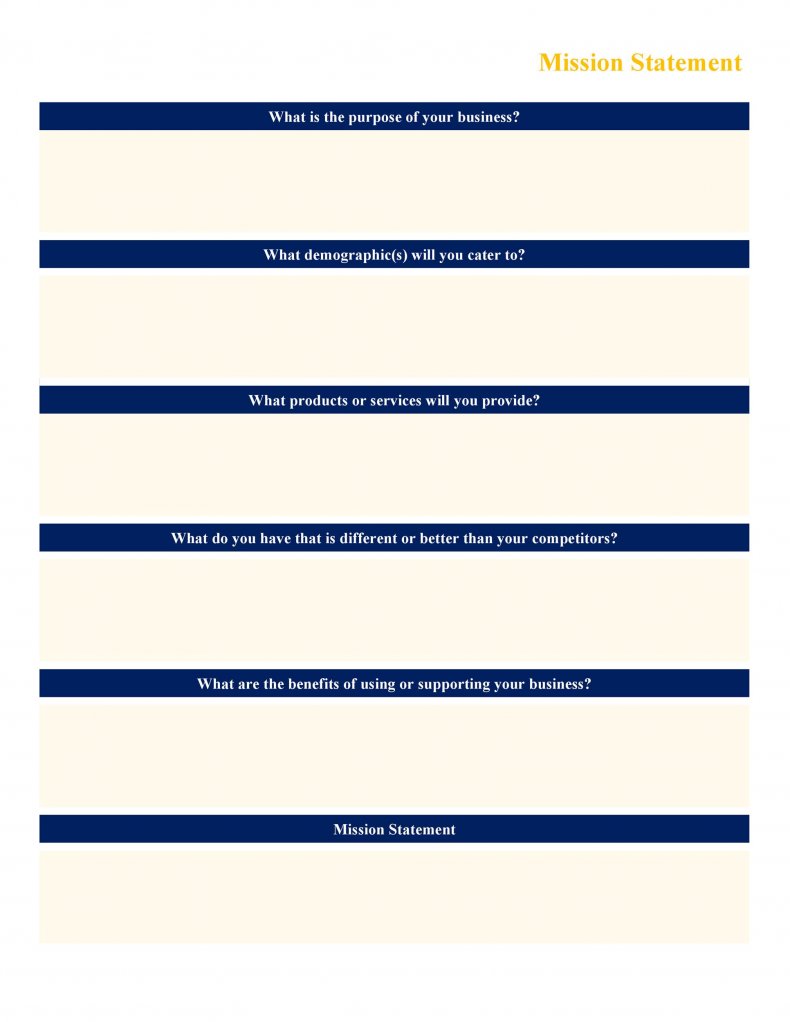
A template can help you consider important questions such as:
- What is the purpose of the organization?
- What products or services does it provide?
- Who does it serve?
- What problem does it solve?
- What value does it provide?
- What principles guide its work?
- What impact does it want to make?
Once you answer these questions, you can turn the ideas into a concise statement that reflects the organization’s identity.
A template should be treated as a starting point rather than a formula. The best mission statements are specific to the organization and written in language that feels authentic.
What Should a Mission Statement Include?
There is no single required mission statement format, but most effective statements communicate several important ideas.
Purpose:
Explain why the organization exists and what fundamental need it aims to address.
What You Do:
Describe the organization’s primary products, services, activities, or areas of work.
Who You Serve:
Identify the customers, clients, members, communities, or other groups that benefit from the organization’s work.
Value or Impact:
Explain the positive result the organization aims to provide.
Guiding Principles:
When appropriate, mention important values or principles that influence how the organization operates.
Not every mission statement needs to include all of these elements explicitly. A concise statement may communicate several of them in one or two sentences.
Mission Statement Example
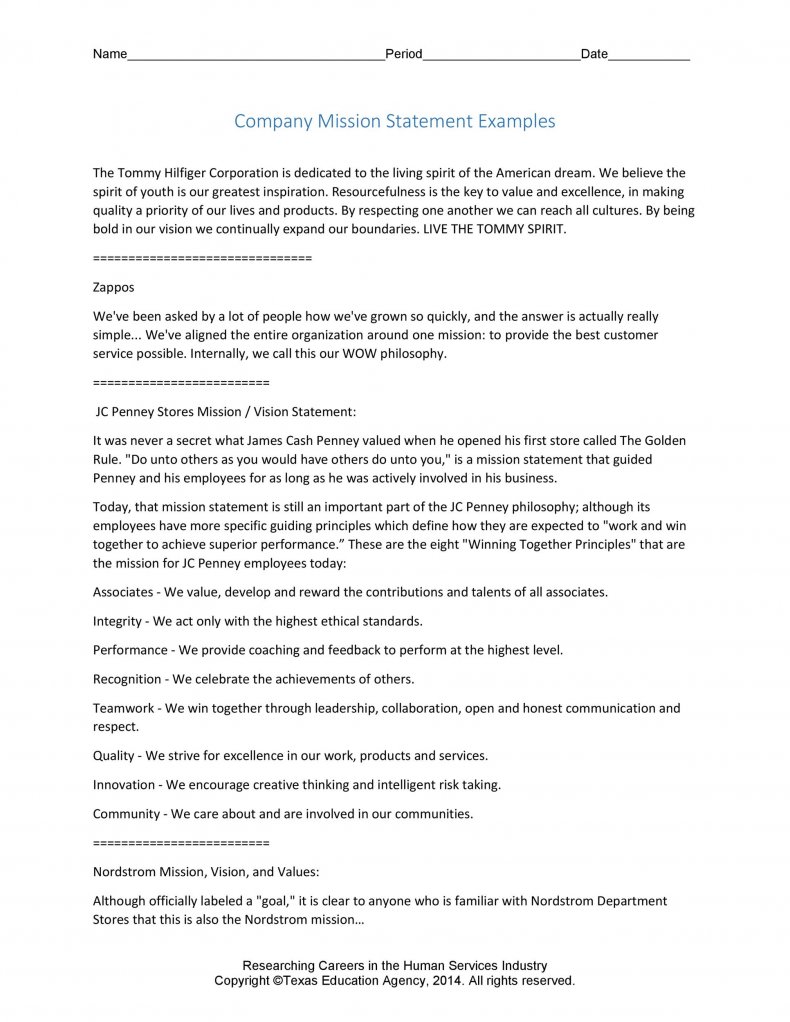
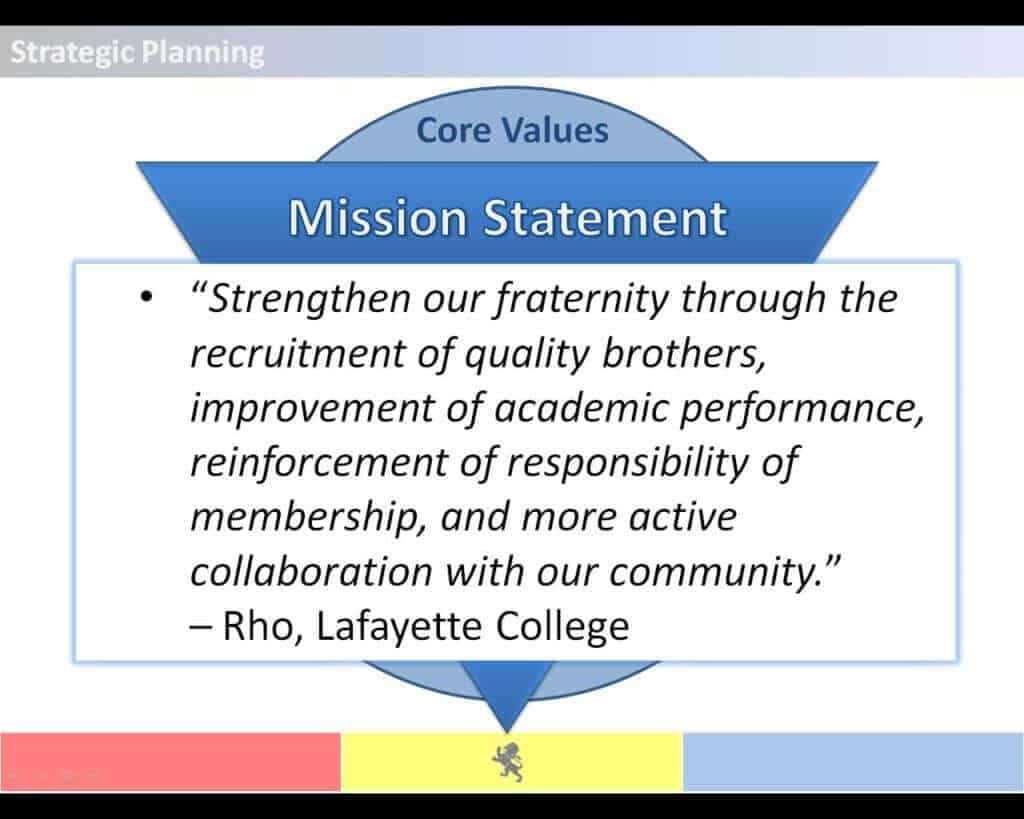
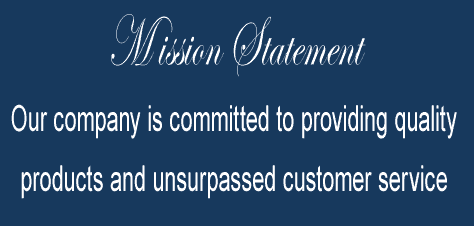
A mission statement example can help demonstrate how a broad organizational purpose can be turned into a concise statement.
For example, a fictional educational company might have a mission centered on making practical learning resources more accessible to students. Instead of listing every course or product it offers, its mission statement could focus on its larger purpose: helping learners gain useful knowledge through accessible educational resources.
The important point is that a mission statement should communicate the organization’s underlying purpose rather than simply provide a list of products or services.
When creating your own statement, use examples for inspiration but avoid copying another organization’s wording. Your mission should reflect your own organization’s identity, audience, goals, and values.
Business Mission Statement
A business mission statement explains the purpose of a company and the value it aims to provide to customers.
A strong company mission statement can help employees understand the organization’s priorities and can provide customers with insight into what the business stands for.
For example, a technology company might focus its mission on making useful technology easier for small businesses to access. A food company might focus on providing affordable and convenient products using responsible sourcing practices.
The best business mission statements are aligned with what the company actually does. A statement that sounds impressive but does not reflect the company’s operations can quickly become meaningless.
Company Mission Statement
A company mission statement can serve as a concise expression of the organization’s identity.
It can be included on a company website, business plan, employee materials, presentations, proposals, annual reports, and other corporate documents.
A mission statement can also help guide internal decision-making. When evaluating a new product, service, partnership, or strategic initiative, company leaders can consider whether the proposed activity supports the organization’s stated purpose.
Nonprofit Mission Statement
A nonprofit mission statement typically explains the social, environmental, educational, charitable, or community purpose of the organization.
A nonprofit may use its mission statement to communicate the cause it supports, the population it serves, and the change it hopes to create.
For example, a community organization might focus on improving access to educational opportunities for underserved young people. A conservation nonprofit might focus on protecting natural habitats and promoting environmental awareness.
Because nonprofit organizations often depend on donors, volunteers, members, and community support, a clear mission can help stakeholders understand why the organization exists.
Personal Mission Statement
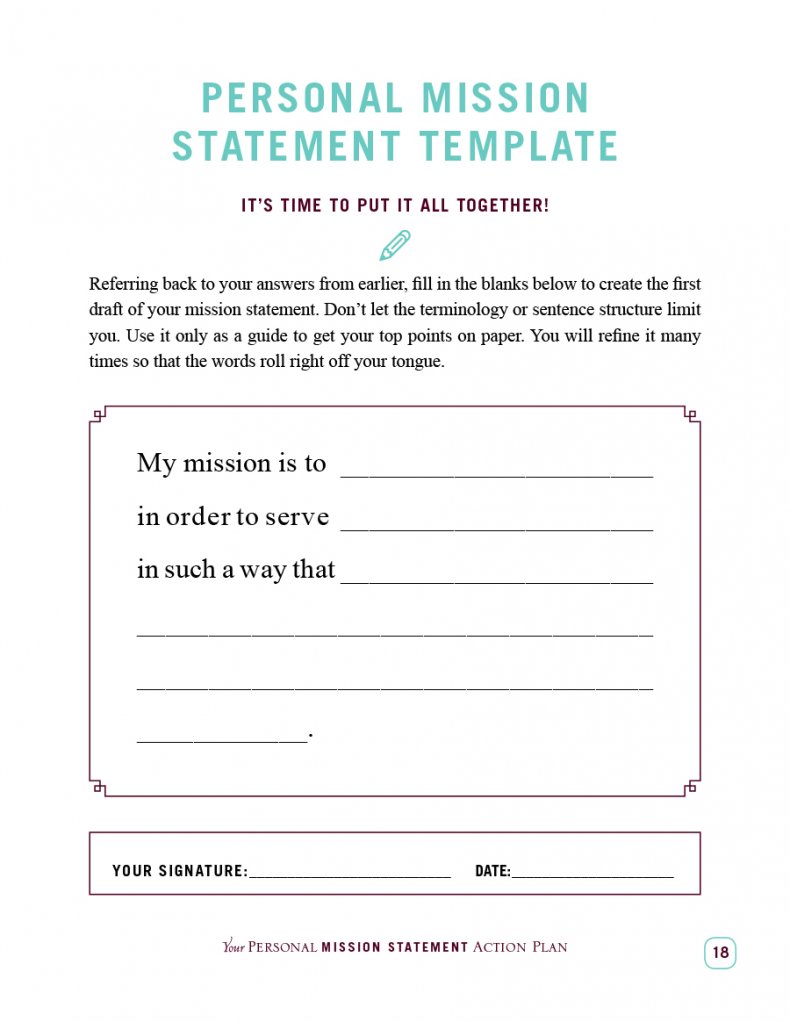
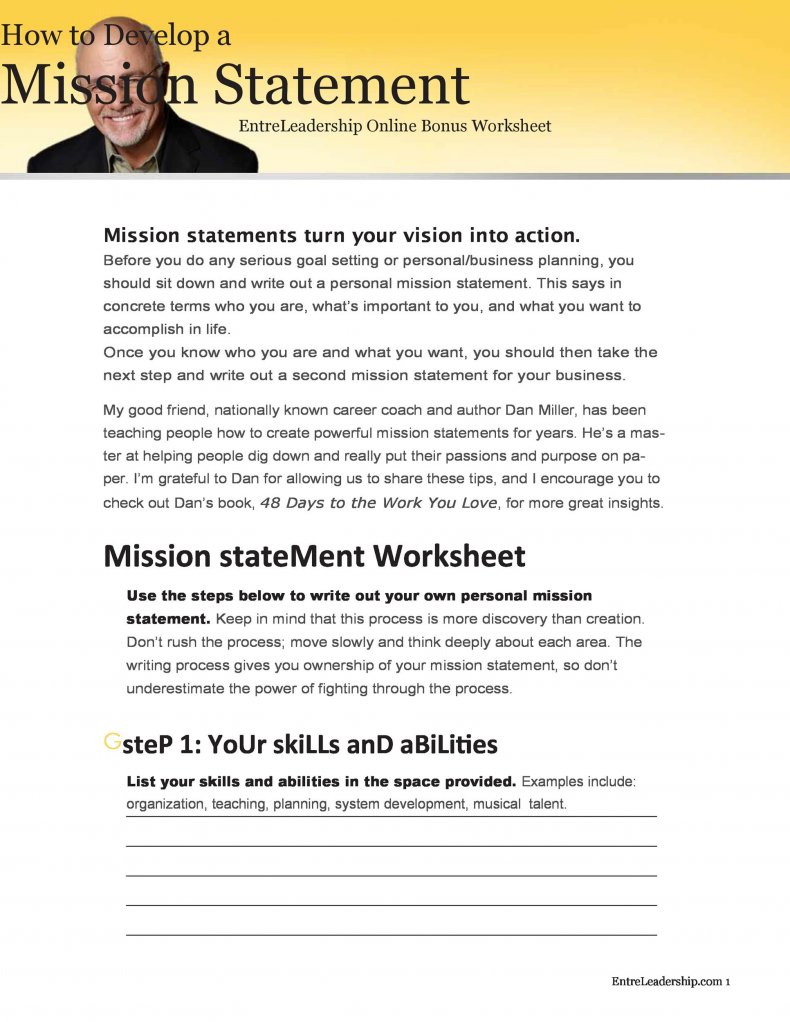
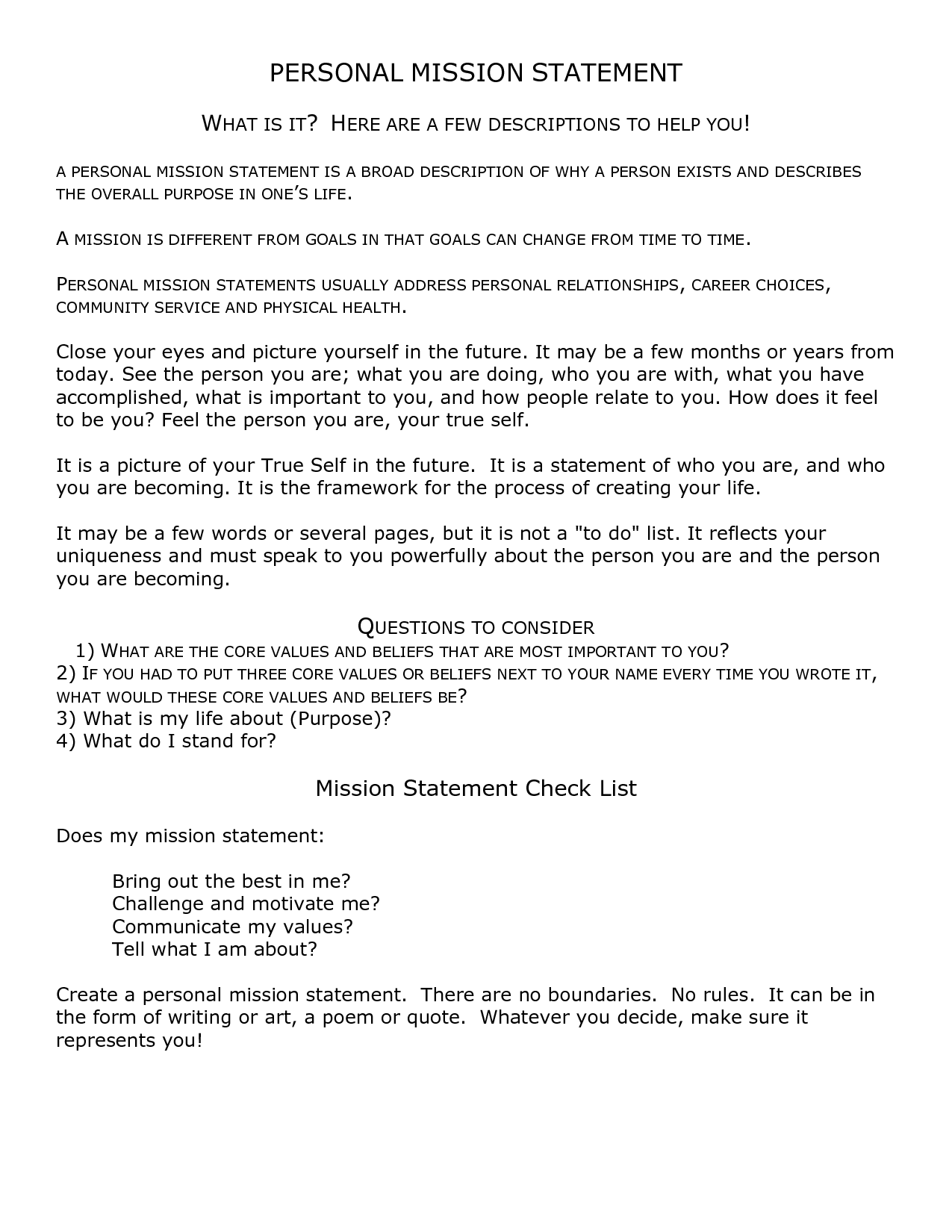
A personal mission statement describes an individual’s core purpose, priorities, values, and direction.
Personal mission statements can be useful for students, professionals, entrepreneurs, leaders, or anyone who wants to clarify what they want to accomplish and what principles they want to follow.
A personal mission statement does not need to sound like a corporate statement. It can be written in straightforward language and can focus on the person’s priorities, strengths, values, and desired contribution.
For example, someone might create a personal mission centered on continuous learning, supporting family, developing professional skills, and helping others through their work.
Organizational Mission Statement
An organizational mission statement can provide a common sense of purpose for a team, association, institution, or other group.
When multiple people work toward different objectives, a clear mission can help establish a shared direction.
An organizational mission statement can be especially useful when defining strategic priorities, communicating with members, onboarding employees, or developing longer-term plans.
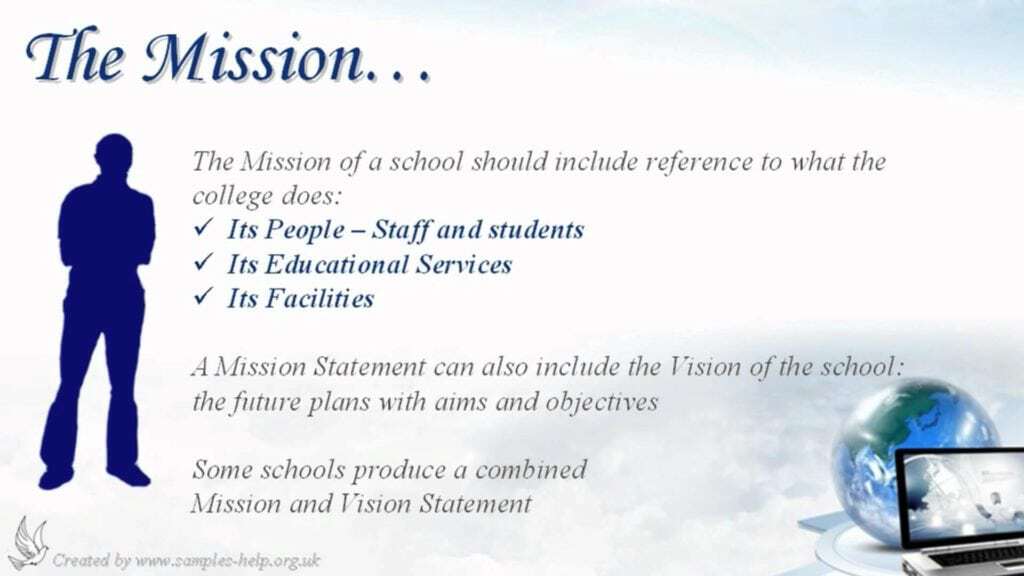
Mission Statement vs. Vision Statement
Mission and vision statements are related, but they generally serve different purposes.
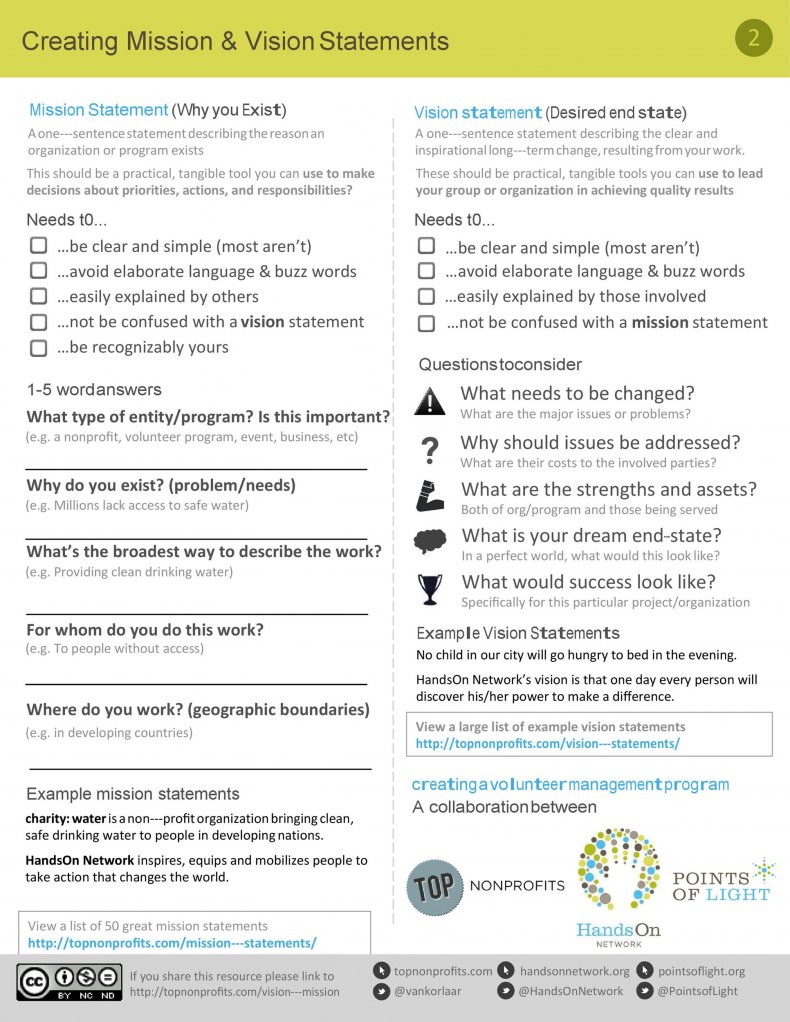
A mission statement primarily explains what an organization does, why it exists, and whom it serves.
A vision statement generally describes the desired future or long-term change the organization hopes to achieve.
For example, a mission might explain an organization’s current work helping students access educational resources, while its vision might describe a future in which every student has access to high-quality learning opportunities.
Some organizations use both statements together as part of their strategic planning process.
Mission Statement vs. Values Statement
A values statement describes the principles and beliefs that influence how an organization operates.
A mission explains the organization’s purpose, while values explain the principles that guide its behavior.
For example, an organization might have a mission focused on providing affordable healthcare services and values centered on compassion, integrity, accessibility, and respect.
Mission and values can complement one another and provide employees and stakeholders with a clearer understanding of the organization.
Why Use a Mission Statement Template?
Writing a mission statement can be surprisingly difficult. Organizations often know what they do but struggle to express their purpose clearly and concisely.
A mission statement template provides a useful framework for the process.
Benefits include:
- Provides a structured starting point
- Helps clarify organizational purpose
- Encourages focused thinking
- Makes it easier to identify the target audience
- Helps organize values and priorities
- Can save time during the writing process
- Useful for businesses and nonprofits
- Can support strategic planning
- Creates a consistent format
- Makes the final statement easier to present and share
The template should ultimately be customized so the finished mission statement sounds natural and accurately represents the organization.
How to Write a Mission Statement
Start by identifying the organization’s fundamental purpose. Ask why the organization exists beyond simply making money or completing routine activities.
Next, identify the primary audience or people who benefit from the organization’s work. Think about the products, services, activities, or programs the organization provides.
Consider the problem you are trying to solve and the value you want to create. If appropriate, identify one or two principles that are particularly important to the organization.
Then combine the strongest ideas into a short statement.
A useful starting framework is:
We [what we do] for [who we serve] by [how we provide value] so that [desired impact].
This is only a writing aid, not a requirement. Your final statement should use natural language and should accurately reflect the organization.
Characteristics of a Good Mission Statement
A good mission statement is generally:
Clear: People should understand it without needing extensive explanation.
Concise: A mission statement should communicate its central idea without unnecessary detail.
Specific: Avoid vague statements that could apply equally to thousands of unrelated organizations.
Meaningful: The statement should express a genuine purpose rather than generic corporate language.
Relevant: It should accurately describe what the organization does today.
Memorable: Simple language can make a mission easier for employees and stakeholders to remember.
Authentic: The statement should reflect the organization’s actual priorities and behavior.
A mission statement does not need to be complicated to be effective.
Where Can You Use a Mission Statement?
A mission statement can appear in many business and organizational materials.
Common locations include:
- Company websites
- Business plans
- Strategic plans
- Employee handbooks
- Annual reports
- Presentations
- Marketing materials
- Nonprofit documents
- Organizational brochures
- Company profiles
- Internal communications
- Recruitment materials
The wording may be adjusted slightly depending on the audience and purpose, but the underlying mission should remain consistent.
Mission Statement for a Small Business
A small business mission statement can be especially useful because it gives owners and employees a simple way to communicate what the business is about.
Small businesses do not need a complicated corporate-style statement. A few carefully chosen words can explain the company’s purpose, target customers, and value.
For example, a local repair business might emphasize reliable service and helping customers keep essential equipment working. A small consulting firm might focus on helping growing companies solve specific operational challenges.
The statement should reflect the actual business rather than trying to imitate the language of a large corporation.
Mission Statement for a Startup
A startup mission statement can help communicate the problem the company is trying to solve and the value it hopes to create.
Startups often evolve quickly, so their mission should be broad enough to remain relevant as products and services develop while still being specific enough to provide meaningful direction.
A clear mission can also help founders communicate their purpose to employees, investors, customers, and potential partners.
How a Mission Statement Supports Strategic Planning
A mission statement can serve as a foundation for strategic planning.
Once an organization understands its core purpose, it can develop goals and strategies that support that purpose. Managers can evaluate proposed initiatives by asking whether they align with the organization’s mission.
The mission should not replace detailed strategic objectives, budgets, performance measures, or business plans. Instead, it can provide a high-level reference point for those activities.
Choose a Mission Statement Template
The right mission statement template depends on the type of organization and the purpose of the document.
A business may need a company mission statement focused on customers and products. A nonprofit may need to emphasize its cause and community impact. An individual may want a personal mission statement focused on values and life priorities.
Whatever format you choose, avoid filling the template with generic language simply because it sounds professional. The strongest mission statements are clear, specific, authentic, and connected to the organization’s actual work.
Our free mission statement templates provide a practical starting point for organizing your ideas and creating a concise statement of purpose. Customize the template to reflect your organization, audience, values, and goals, then review the final wording with the people who will be responsible for putting the mission into practice.
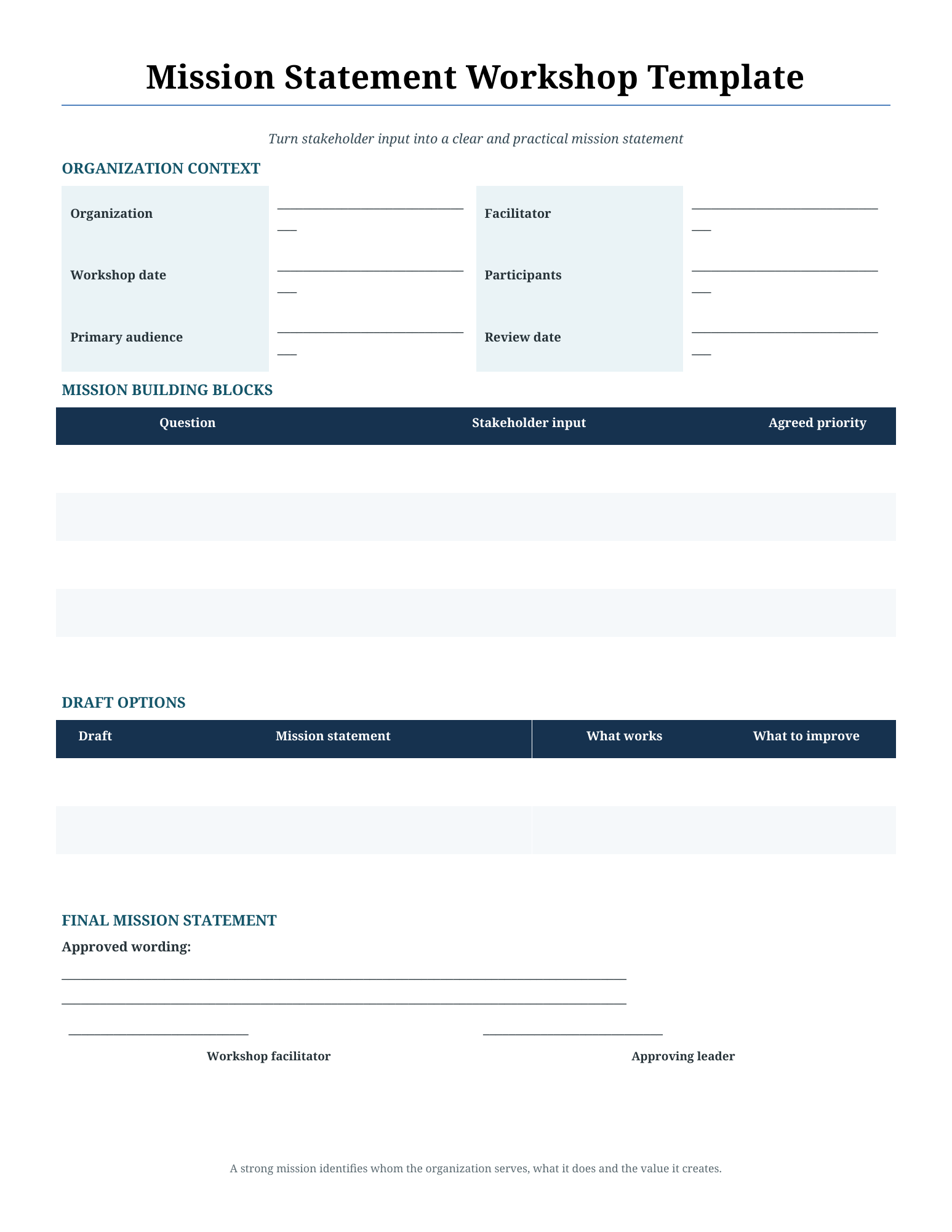
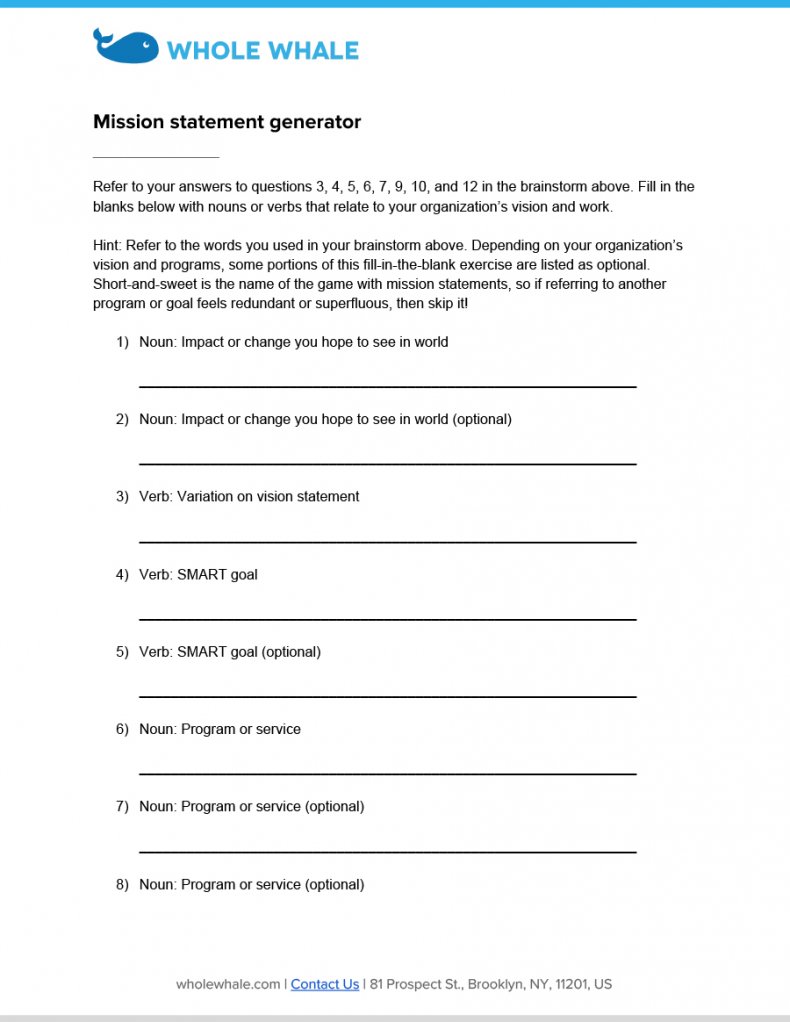
Download Mission Statement Workshop Template
This Word workshop template turns stakeholder input into focused mission statement drafts, comparison notes, agreed priorities, and final approved wording.

FAQs
1. What is a mission statement template?
A mission statement template is a pre-formatted guide that helps businesses, nonprofits, organizations, or individuals organize their ideas and create a clear statement describing their purpose and activities.
2. What should a mission statement include?
A mission statement commonly communicates an organization’s purpose, what it does, whom it serves, and the value or impact it aims to provide.
3. What is a good mission statement example?
A good example clearly communicates an organization’s purpose without unnecessary detail. It should be specific enough to distinguish the organization while remaining concise and easy to understand.
4. What is the difference between a mission statement and a vision statement?
A mission statement generally explains an organization’s current purpose and work, while a vision statement describes the desired future or long-term outcome the organization wants to achieve.
5. Can a small business use a mission statement?
Yes. A small business can use a mission statement to communicate its purpose, target customers, core activities, and the value it aims to provide.
6. What is a nonprofit mission statement?
A nonprofit mission statement explains the organization’s cause, purpose, target community, and the impact it aims to create.
7. Can I create a personal mission statement?
Yes. A personal mission statement can summarize an individual’s values, priorities, purpose, and desired direction in life or work.
8. How long should a mission statement be?
There is no universal required length. Many effective mission statements are relatively short, allowing people to understand and remember the organization’s core purpose easily.
9. Why is a mission statement important?
A mission statement can help communicate an organization’s purpose, guide decision-making, align employees, and explain to customers or stakeholders what the organization is trying to accomplish.
10. Can I use a mission statement template in Word?
Yes. An editable Word template can be customized with your organization’s name, purpose, values, target audience, and other relevant information before being shared or printed.
You must be logged in to post a comment.